
Coconut Crab Conservation
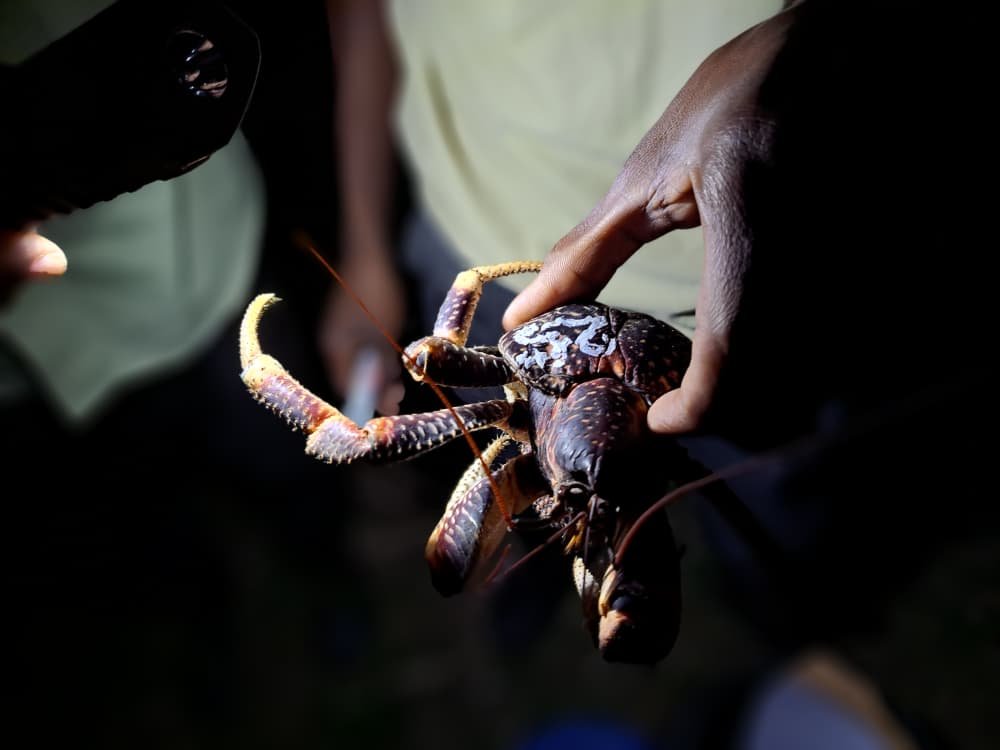
Coconut crabs are the largest land invertebrates on Earth. They can weigh over eight 4 kilos, measure one meter across, and live for more than fifty years. They use their powerful claws to crack open fallen coconuts and feed on seeds, fruit, and plants. In the entire Zanzibar archipelago, only three remaining populations of coconut crabs are left. The hotel grounds at Makangale Bay is one of these last refuges. Because they have disappeared from almost everywhere else, Makangale Bay is one of the very few places on the archipelago where you can still see them.
Ongoing Research and Monitoring
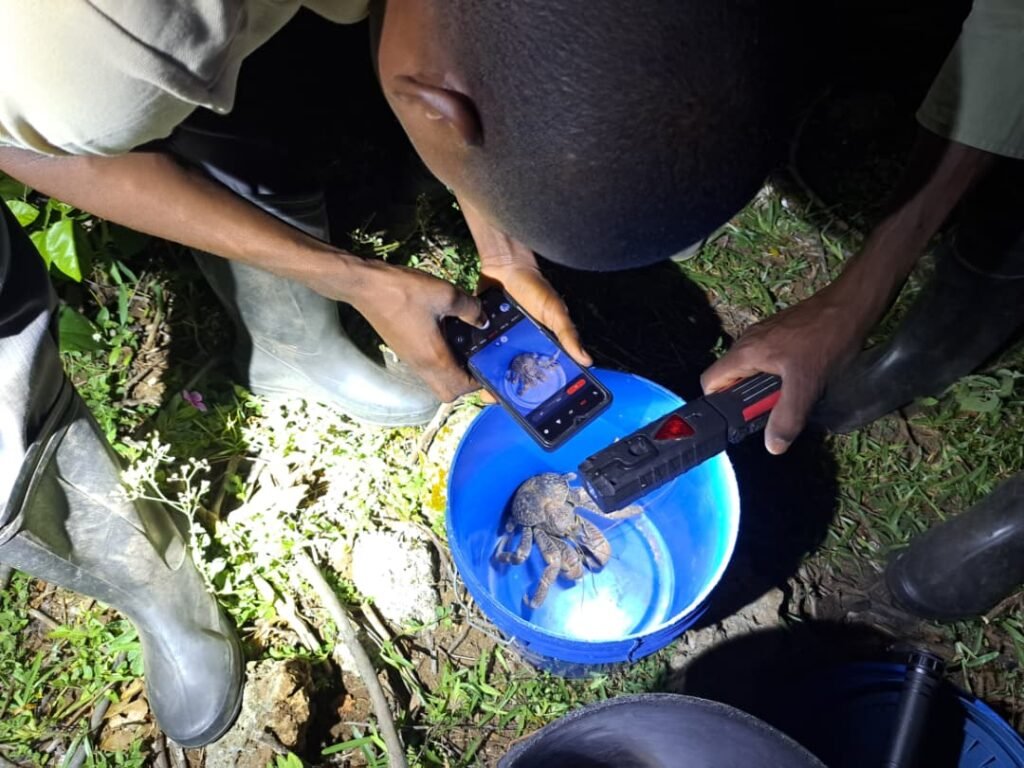
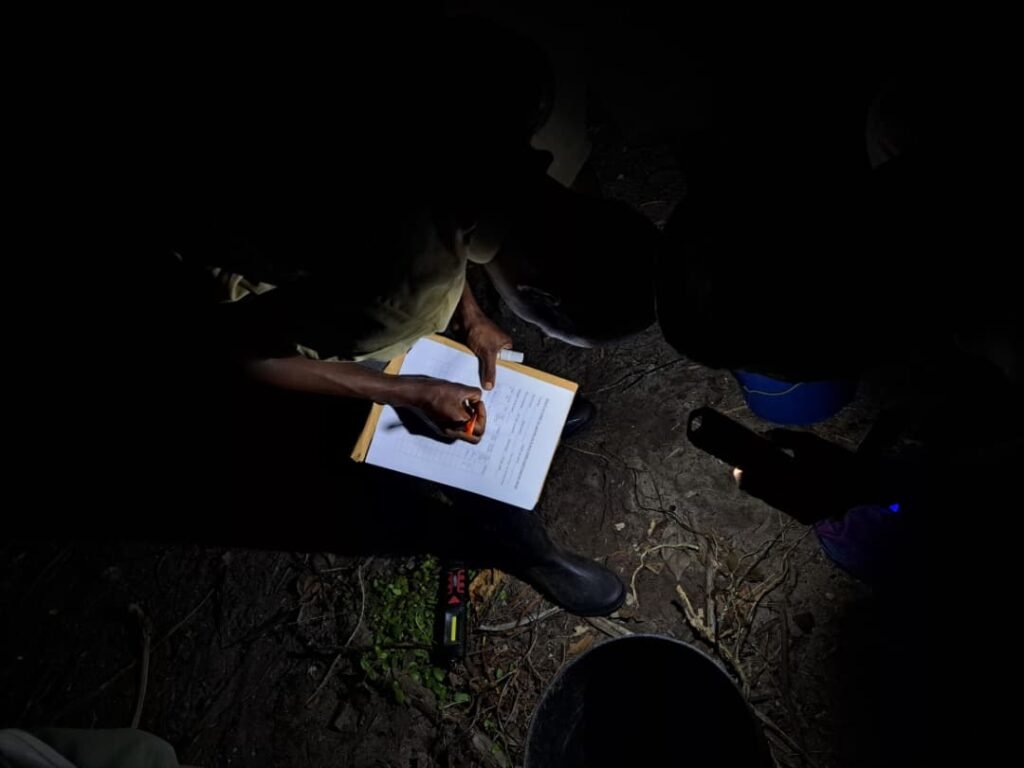
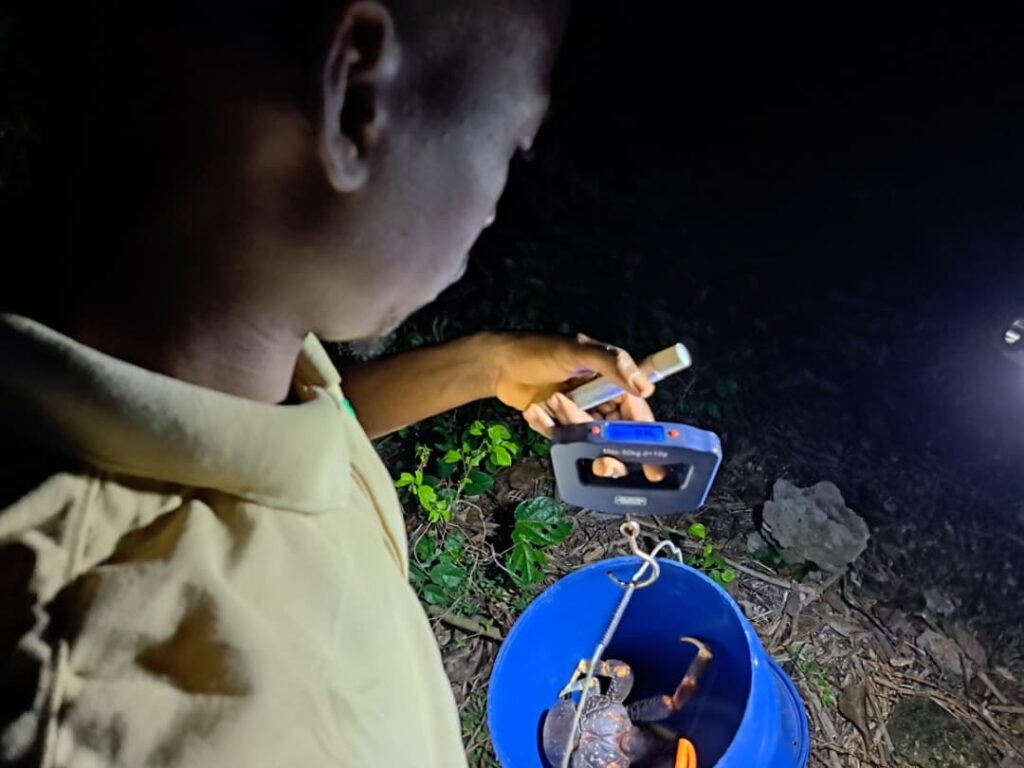
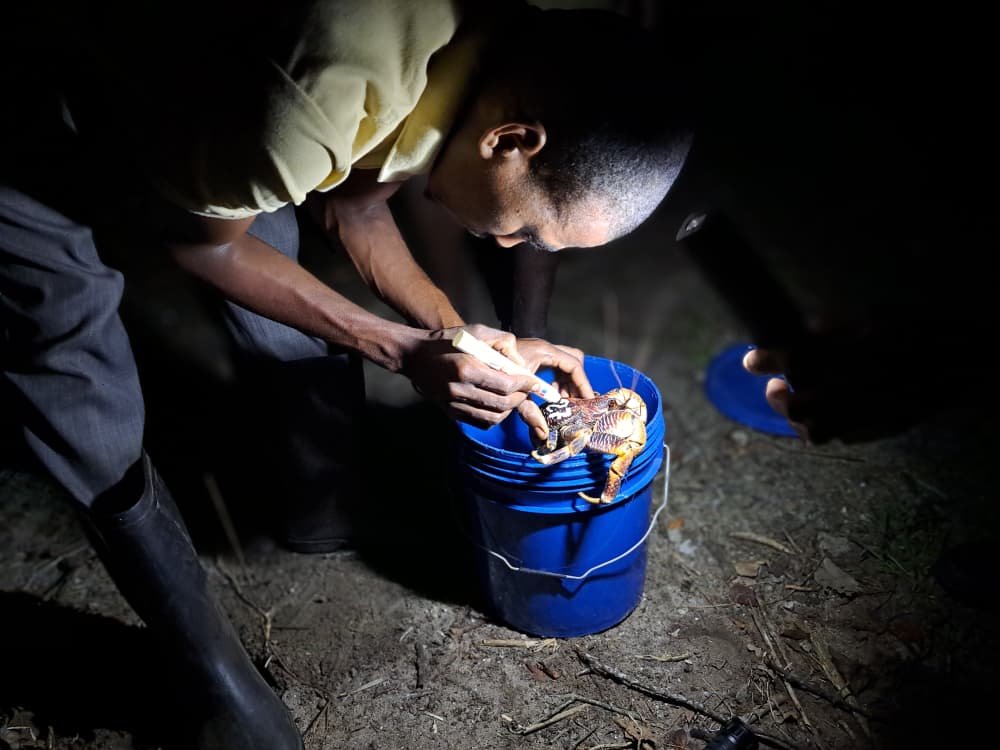
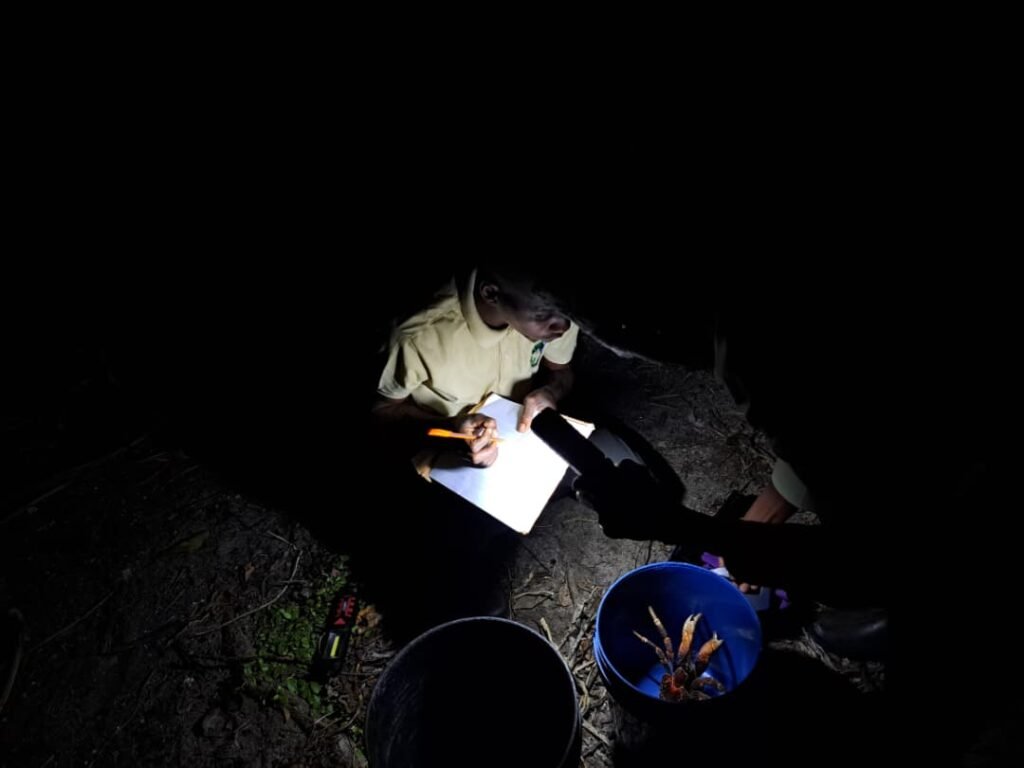
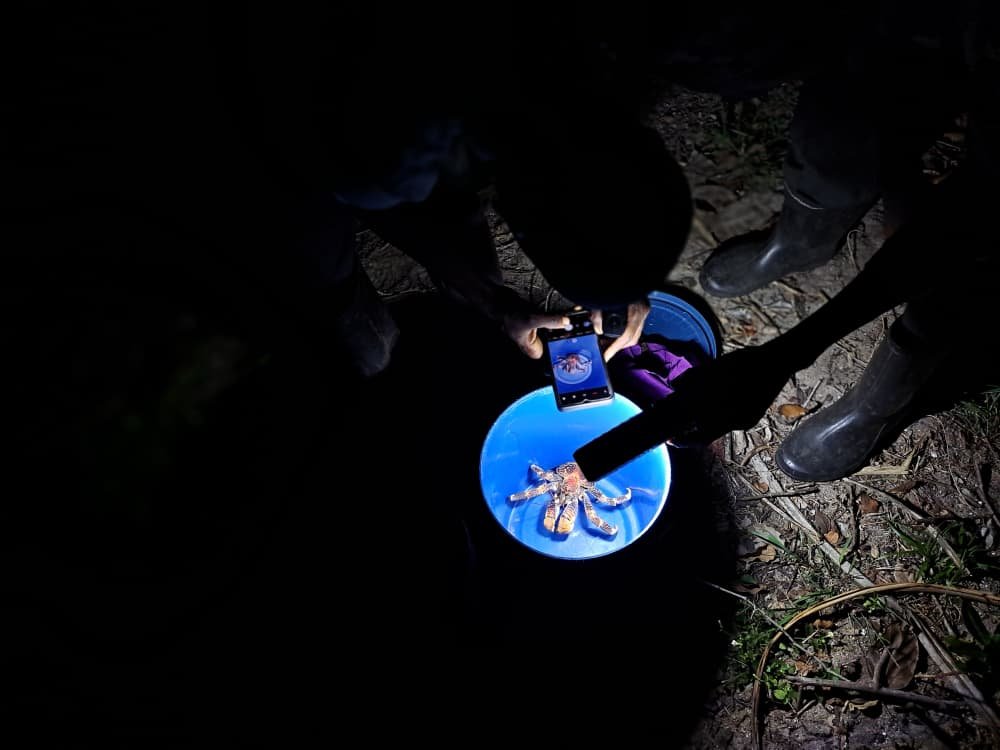
Through a research and conservation project led by Professor Tim Caro from the University of Bristol, the population is monitored. Every month, two local research assistants, Jaffar and Muhammed, travel to the lodge by bike to monitor the local population. They patrol the hotel grounds to find, weigh, measure, and photograph individual crabs. This data helps scientists track population numbers, study how fast the crabs grow and how the population develops.
If you stay with us during their monthly visit, you are welcome to join Hamad and Muhammed on their rounds and watch the scientific monitoring up close.
Nightly Patrols and Guest Walks
The coconut crabs face lots of threats and we monitor them daily to avoid poaching. You are always welcome to join our team on these nightly walks. Grab a flashlight, walk quietly along our forested paths, and experience these massive, slow-moving creatures in their natural home. If you are not staying but would like to join, then please let us know or drop by at sunset.